
Kirkwood City Directory Collections by Year
Kirkwood research has one unusually direct local volume and a wider county shelf. The Missouri Historical Society index makes the 1910 Directory of the City of Kirkwood searchable from home. For other years, the St. Louis County Library holds county directories in print, microfilm, and microfiche, with selected volumes available through its digital collection. These are not a complete annual Kirkwood-only series. Treat the title, year, and page or image as part of the result, especially where the book uses a St. Louis label for an address that is now understood as Kirkwood.
| Collection | Verified period | Repository | Access route |
|---|---|---|---|
| Directory of the City of Kirkwood | 1910 | Missouri Historical Society | Search and browse online |
| St. Louis County directories | 1893, 1896, 1903, 1909, then selected volumes through 1979 | St. Louis County Library | Print, microfilm, microfiche, and selected digital volumes |
| Haines Criss-Cross directories | Early and mid twentieth-century runs | St. Louis County Library reference collection | Street-and-number research; exact year availability varies |
| Kirkwood Historical Review | 1962-2022 | Kirkwood Historical Society and MHS index | Use the index as a lead to the issue |
The holdings list does not name a publisher for each county volume, so a county-directory publisher should not be guessed. It also does not list 1977 or 1978. Those gaps matter when trying to place someone in a narrow period.
Kirkwood City Directories at the Library
The St. Louis County Library city-directory collection keeps several access paths open. A researcher can use print, microfilm, or microfiche when a scan is absent, while the St. Louis County Directories Digital Archives allows free searching and browsing without a library card. Pick a year first, enter a surname or part of an address, and then browse the book around a promising hit. The online result is useful, but the volume itself is still the source to cite.
The library's year list includes separate format and shelf details. That distinction is useful when an older volume appears in a catalog but does not open on a screen. A branch visit, a reference question, or a copy request can be the next access channel.
The SLCL digital-directory collection offers a year selector, name and address search, and a browse route for the county volumes.
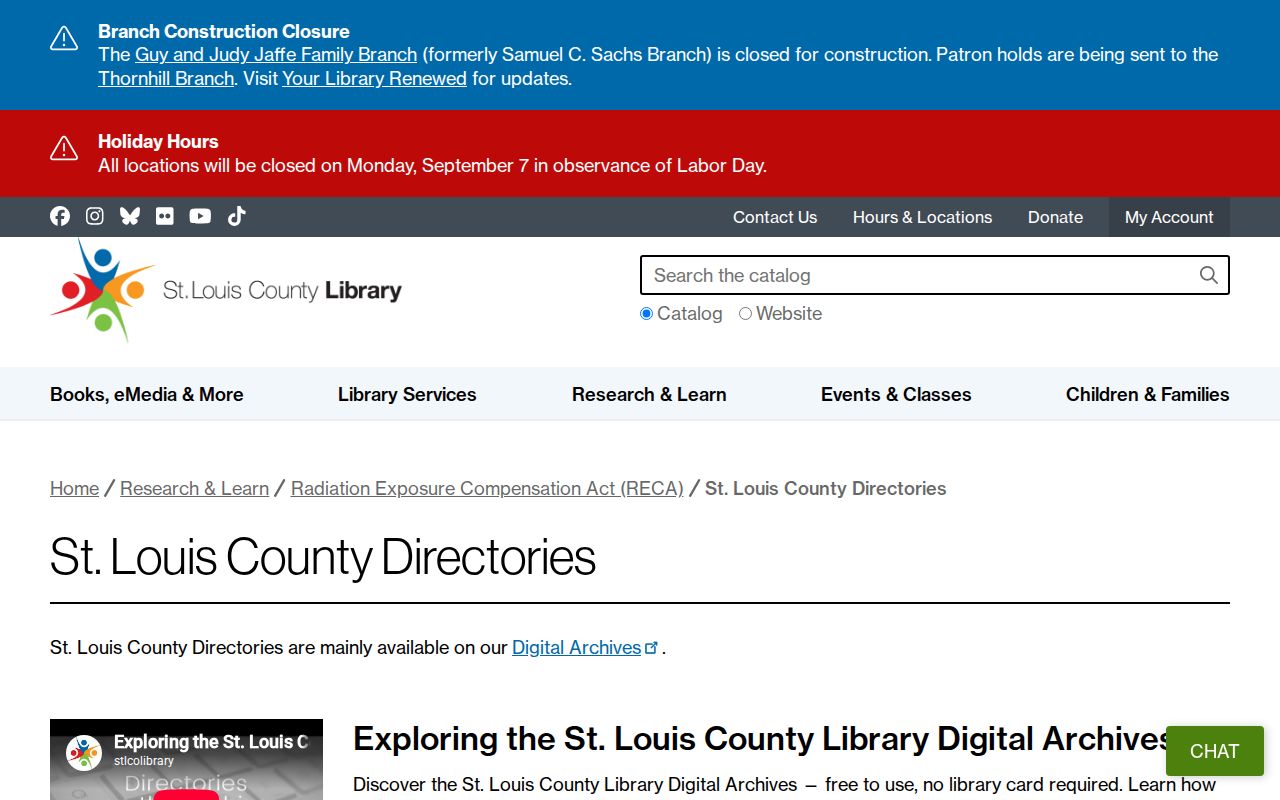
Browsing preserves the alphabetical context that a short search result can hide, including nearby spellings and separate household or business listings.
The 1910 Kirkwood City Directory Index
The 1910 Kirkwood volume is a strong starting point when the date fits. The MHS index credits the Kirkwood Tablet as publisher and identifies 2,622 indexed source records. Its search fields include last name, first name, alternate spelling, corporate name, and address. That last pair matters: the index can surface Bell Telephone Co. of Missouri at 103 East Main Street, the Kirkwood Tablet at 109 N Webster Avenue, and Suburban Electric at 112 N Webster Avenue. A hit may identify a business or public utility rather than a person.
Use exact, starts-with, or sounds-like name searching where a surname has several spellings. Then retain the record type and look for the page or surrounding alphabetical material before treating an index entry as proof of identity.
MHS also indexes the Kirkwood Historical Review from 1962 through 2022, with 20,623 indexed records. A name or topic hit can identify an issue and date, but the issue itself remains the item to consult for context.
Browse Kirkwood City Directories Beyond OCR
A digital name search is not a complete reading of a directory. SLCL specifically recommends browsing the alphabetical surname section because optical character recognition can miss an entry. This is most helpful with initials, cramped type, worn pages, and surnames that may have been indexed under an alternate form. Check the pages before and after a likely result, then make a research note with the directory year, repository, page or image, and the spelling actually printed.
Note: A missing search hit can reflect OCR or indexing limits, a missing volume, or non-enumeration, not a final answer about a person.
Read a Kirkwood City Directory Entry
Most residential city directories arrange entries alphabetically by surname and may give a household head, an address, and an occupation. The amount of detail changes by volume. Compare the printed entry with the abbreviation key at the front of that same book rather than expanding terms from memory. A current parcel record can help check the physical location, but it cannot turn an old listing into a current residence claim.
| Name line | Read it as the directory's listed person or organization, not as every person at the address. |
|---|---|
| Address | Capture the number and street exactly, then compare dated maps or parcels if the form seems unfamiliar. |
| Occupation | Copy it as printed. It can be abbreviated and is not a full biography. |
| Corporate name | In the 1910 MHS index, this field can identify a firm, utility, or institution. |
| Page or image | Keep it with the volume title and year so another researcher can check the entry. |
- Criss-cross directory
- A directory arranged by street and house number first. Match it to the alphabetical section for name and context.
- Householder listing
- A listing centered on the person the directory chose to name for a household; it does not prove a complete household roster.
- Abbreviation key
- The front-matter list that explains local shorthand. SLCL notes K for Kirkwood and ns for north side.
Use a printed address as a dated location clue. Its meaning is strongest when the volume year, page or image, and a matching map, deed, or census source are preserved with it.
Kirkwood Abbreviation Clues
Small marks can change the meaning of a city directory entry. SLCL's guide gives lab for laborer, brklyr for bricklayer, and sten for stenographer, alongside location clues such as ns and K. These examples explain why the key belongs in the research file with the entry itself. A directory may also use residence, boarding, widow, estate, or business conventions that vary by publisher and year.
When a line is unclear, quote the printed abbreviation in notes and mark the expansion as tentative until the volume's own key confirms it.
Kirkwood Directory Labels After 1876
Older directory labels need a jurisdiction check. In 1876, St. Louis City and St. Louis County separated in the event often called the Great Divorce. A historical result marked St. Louis can therefore need more context before it is tied to a modern Kirkwood address. City boundaries, postal wording, and county coverage do not always use the same labels.
- 1853: Kirkwood's railroad-town history begins with the first depot.
- 1865: Kirkwood incorporated, creating a municipal record layer alongside wider county sources.
- 1876-1877: Confirm the city or county jurisdiction and use the county deed-history context carefully.
- 1991: Label Meacham Park material with the jurisdiction in effect at the record date because annexation changes the civic context.
Note: Preserve the place name printed in the source, then add a separate note when a modern Kirkwood boundary supplies later context.
Trace Families Across Kirkwood City Directories
Family-history work is stronger when it follows a dated sequence rather than one isolated listing. Start with the closest available directory year, make a copy of the full entry, and compare the next available volume. Address changes may point to a move, while a name change, an unlisted year, or a vanished entry needs another source before it is explained. Census databases, deeds, obituaries, and maps can each answer a different part of the question.
- Choose the target year and search the surname, alternate spelling, or address in the nearest directory volume.
- Browse the alphabetical pages and record the exact entry, year, title, and page or image.
- Follow the name into the next available volume, noting changes without assuming why they happened.
- Use a reverse directory, when available, to connect the street and number back to the alphabetical listing.
- Pair the dated directory with census, deed, obituary, or map evidence that fits the same period.
The Kirkwood resident lookup can help when a historical find needs a separate, current-record check. Keep the historical and current records labeled by their own dates.
Kirkwood Companion Archives
Directories are only one shelf. The Kirkwood Public Library points researchers to local digital material, oral histories, Heritage Hub obituaries and death notices, HeritageQuest census, and Ancestry Library Edition for in-library use. SLCL's Kirkwood local-history index also identifies June Wilkinson Dahl's A History of Kirkwood, Missouri, 1851-1965; remote photocopy requests are limited to three searches per request. These sources can add context without replacing the dated directory entry.
The Kirkwood Historical Society at Mudd's Grove offers tours and research sessions by reservation. Its digital collection reaches beyond the directory shelf, notes roughly 400 items across about 175 years, and provides a research contact for local holdings.
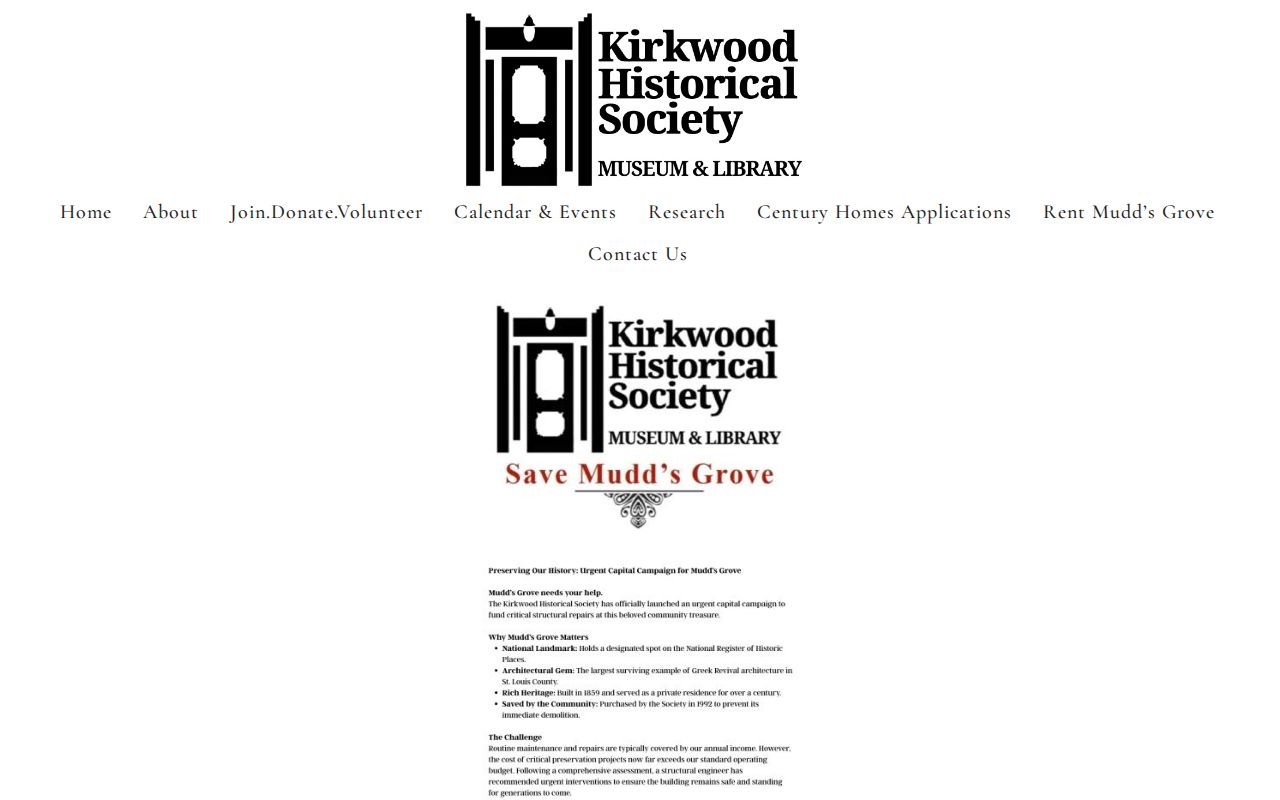
Reservation-based research and digital collection records can fill in local context, but a page, image, issue, or audio item should be requested under the repository's own access rules.
Note: An indexed item is a lead to a source, not a promise that its complete image, text, or audio is available online.
Kirkwood Oral History Sources
The Emerson History & Genealogy Center at SLCL's Clark Family Branch holds about 125,000 history and genealogy items, along with FamilySearch screens, a Memory Lab, and a digitization room. Its reference services can help locate a catalog entry, index, or finding aid when a city directory points beyond the digital collection.
The Kirkwood Oral History Project contains ten audio cassettes from 1995 to 1997 and focuses on events after 1960. It is a local-memory source with research-center access procedures, not a substitute for the dated city directory listing.
Note: Ask an archive about access, copying, and rights before treating an index hit as material ready to reproduce.